

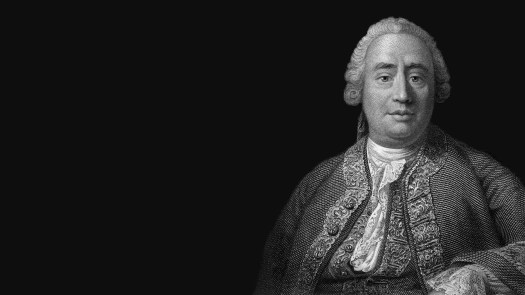
Philosophical Skepticism
“A wise man apportions his beliefs to the evidence.” – David Hume
Skepticism is generally classified as an attitude or doubt to one dogmatic belief which involves in many principles. It is often exercised in the domain of supernatural, moral, religion, or knowledge. But very often, the skepticism always constitutes in the philosophical debate such as – Epistemology, which concerns the theory of knowledge itself whether is true or false. Philosophical Skepticism comes in various forms. Radical forms of skepticism assert that knowledge or rational thinking is impossible, and urge to suspend judgment which they think knowledge is unattainable. Most of this radical skepticism school philosophers maintained that there could be no rational ground for knowledge, it’s originated from the Ancient Greek philosophers to Modern Philosophy such as David Hume and René Descartes. Several Greek philosophers, including Pyrrho, Arcesilaus, Carneades, Sextus Empiricus, even the Sophists’ leading critic – Socrates, also had a skeptical tendency; with his famous claiming that – “I know that I know nothing”.
The problem with the skepticism regards to the senses, ever since, the time of Socrates had troubled Greek philosophers for a very long time. The only exceptions were those who like, Parmenides and Plato, denied that the cognitive value of perception, and made their denial into an opportunity for an intellectual dogmatism. There is however in Plato philosophy that, a very different doctrine to the effect that there is nothing worthy to be called ‘knowledge’ derived from the senses, the only real knowledge only has to do with abstract concepts. For instance, the view of 2 + 2 = 4 is real knowledge; whereas the statement of ‘snow is white’ is full of ambiguity and uncertainty that philosophers cannot find a ground for truths.
In a nod to Heraclitus’ * metaphysical doctrine, Plato derived his belief that there is nothing permanent in the sensible world. In such a world, a perpetual change was to be expected, and perpetual flux is what Heraclitus believed in. This, combined with the doctrine of Parmenides, led him to the conclusion that knowledge is not derived from the senses, but is only to be achieved by the intellect. Thus, all these paradoxes lead to the inclusive of the doctrine of Protagoras that – “Man is the measure of all things, of things that are that they are, and of things that are not that they are not.” It simply means: that each man is the measure of all things, and that, when men differ, there is no objective truth in which it is not wrong or right in the sense that nothing is absolutely definite. The doctrine is essentially skeptical and is presumably based on the ‘deceitfulness’ of the sense. Therefore knowledge, Plato thinks, consists in the reflection, not in impressions, since the mind contemplates something through its own mental faculty, others through the bodily senses. Hence, for Plato, the perception is not knowledge, because it has no part in comprehending the truth.
From the above considerations have shown that, while there is a formal kind of knowledge, namely logic and mathematics, which is not derived from the perception leads Plato’s arguments as regards all other knowledge is fallacious. Of course, This does not prove that his conclusion is false, it is only, so far suggested that there’s no valid reason for supposing it is true. However, a few thousand years later, there’s an eminent philosopher usually consider as a founder of modern philosophy – René Descartes (1596-1650) who carried forwards Plato’s skepticism towards the bodily senses. There is a freshness in his work that is not to be found in any previous philosopher since the time of Plato.
There’s a reminiscent of Plato characteristic for the love of mathematical truth in René Descartes philosophy. Descartes was a philosopher and a prominent mathematician which deeply influenced by the new physics and astronomy of Galileo Galilei (1564-1642, Father of Modern Physics), who is championing the doctrine of Copernican Heliocentrism* in his time. There’s a certain characteristic of skepticism that profoundly altered the methodological approach in the modern principles of epistemology which associated in Descartes’ works which called – Cartesian Doubt (Cartesian Skepticism). It is the basis for Descartes’ philosophical statement as “Cogito ergo sum” (I think, therefore I am).
This peculiar assertion of Descartes’ solipsism is a philosophical idea that only one’s own mind is sure to exist. As in epistemological position, solipsism holds that knowledge of anything outside one’s own mind is uncertain. The emphasis on the mind as certain criteria to doubt particular matters is a central idea of his work in “Discourse on the Method”. Descartes started his line of reasoning by doubting everything, so as to assess the world from a fresh perspective, clear of any preconceived notions laid down by his predecessors, only the thoughts to doubt is known for certain. He begins with the skepticism in regard to the senses; can I doubt, he says, that I am sitting right here by the fire in a dressing gown? Yes, for sometimes I have dreamt that I was here when in fact I was naked in bed. This peculiar characteristic of Cartesian Skepticism regards the knowledge of the sense is fallacious and knowledge of external things must be by the mind, not by the senses.
Russells contends, that Descartes regarded the bodies of men and animals as machines; animal he regarded as automata*, governed entirely by the law of physics, and devoid of feeling or consciousness. Men, he thinks, are different: they have the soul, which resides in the pineal gland (a small endocrine gland in the brain of animals with backbones). There the soul comes in contact with the ‘vital spirits’, and through this contact, there is an interaction between soul and body. This conception, apparently, is rather odd in the mind of modern people who regarded the mind and matter is nevertheless inseparable. But, however, this Dualism of mind and matter in Descartes’ doctrine has inevitably led to unimaginable consequences. The soul, in a sense, is wholly independent of the body, since it was never acted on by the body. The other was that it allowed the general principle that – ‘one substance cannot act on another’. There were two substances, mind and matter, and they were so dissimilar that an interaction between these two seems inconceivable.
We will not discuss the philosophy of mind and matter now but rather focuses that, this Cartesian Skepticism which regards the mind as opposed to matter has profoundly altered the subsequent thinkers. With this exception, modern philosophy has very largely accepted the formulation of its problem from Descartes, while not accepting his solutions. The Cartesian system presented two parallel but independent worlds, that of mind and that of matter, each of which can be studied without reference to the other. Whereas this inconsistency of Descartes unresolved dualism has made him the source of two important but divergent schools of philosophy in the subsequent years – Empiricism and Idealism.
David Hume (1711-76) is one of the most important Scottish philosophers in modern philosophy; because he developed to its logical conclusion that the empirical philosophy of John Locke and George Berkeley, and by making it self-consistent and made it incredible. Russell thinks David Hume represents, as a dead end in his philosophical ground which, it is impossible to go further. Hume’s philosophy, whether true or false, Russell thinks it represents the bankruptcy of eighteenth-century reasonableness. David Hume starts out by carrying forwards the doctrine of Locke’s Tabula Rasa* (Blank State); taking nothing on trust, but seeking validation to be obtained only by the bodily senses which derived from experience and observation as opposed to Descartes’ solipsism. Of course, David Hume went even further than Locke’s empiricism which he arrives at the disastrous conclusion that from experience and observation nothing is to be learned at all.
He asserts that there is no such thing as rational belief: ‘ if we believe that the fire warms, water refreshes, this only because it costs us too much pain to think otherwise.’ We cannot help believing, but no belief can be grounded in reason. Nor can one line of action be more rational than another, since all alike are based on irrational of one’s volitions. Maybe what Hume suggests here might be Pragmatism*. Despite that, but what Hume concerns here is that knowledge is uncertain, such as is obtained from empirical data by inferences that are not demonstrative. This includes all our knowledge as to the future, and as to unobserved portions of the past and present. In fact, it includes everything except, on the one hand, direct observation, and on the other, logic and mathematics. This analysis of probabilities in knowledge only led Hume to certain skeptical conclusions, which are difficult to refute and accepted.
In these difficulties, Hume contention is that there is no such thing as an impression of a causal relation. We can perceive, by mere observation of A and B, that A is above B, or to the right of B, but not that A cause B. Suppose that, the statement of ‘what begins must have a cause’, he says, is not one that has intuitive certainty, likewise the statement of logic and mathematical demonstration. As he puts it: “There is no object, which implies the existence of any other if we consider these object themselves, and never look beyond the ideas which we form of them.” At this, Hume argues that it must be the experience that gives knowledge of cause and effect, but that it cannot be merely the experience of two events A and B which are in a causal relation to each other. Because when we are, in the experience, two objects are constantly co-joined, we do in fact infer one from the other, thus, leads us to believe that there is a necessary connection between A and B.
In conclusion, when we say ‘A causes B’, we only mean that A and B are constantly co-joined in fact, not that there is some necessary connection between them. It is the mind gave the impression of what appears to us as a necessary connection between objects which leads us to the belief that A causes B, gives nothing new in the object, but in the mind leads to an association of ideas; thus ‘necessity is something that exists in the mind, not in the objects.’ Perhaps, this peculiar notion of ‘what things exist in the mind’ is what Immanuel Kant attempted to answer Hume’s argument in his book – “Critique of Pure Reason”. (I do not wish, at the moment, to discuss Kant’s Philosophy. Which I think it has an immense influence in the German Idealism of Hegel and Marx. But, I rather differ it to another time which I think, that I’m adequate enough to discuss it comprehensively.)
The controversy of these thus reduced to one of empirical fact: Do we, or do we not, sometimes perceive a relation which can be called causal? Hume says no. In general, he thinks, those who say yes are taking such a view that we can sometimes perceive causal relations, though in most cases we are only obliged to infer them, more or less precariously, from the constant conjunction of events. Causation, Hume thinks, is that it is different in that it takes us beyond impressions of our senses, and informs us of unperceived events. If there were such a justification, it would have to proceed from the principle ‘that those instances, of which we have had no experience, resemble of those of which we have had experience.’ For this principle, Hume thinks, it is not logically necessary since we can at least conceive a change in the course of nature. It should, therefore, be a principle of probabilities. But all probable arguments cannot itself be proved by any probable argument. Therefore, the conclusion is one of complete skepticism.
Russell thinks that Hume’s skepticism rests entirely upon his rejection of the principle of inductive reasoning* (bottom-up logic) which the premises are viewed as supplying some evidence for the truth of the conclusion, and the truth of the conclusion of an inductive argument may be probable, based upon the evidence given by experience. To this extent, Hume proved that pure empiricism is not a sufficient basis for science. But if this one principle is admitted, everything else can proceed in accordance with the theory that all our knowledge is based on experience is fallacious, Russells says: “this is a serious departure from pure empiricism”. Though, however, these are the questions not directly raised by Hume’s argument. But, Russells refuted it: “What these arguments prove and I do not think the proof can be controverted”. It is that induction is an independent logical principle, incapable of being inferred either from experience or from logical principles and that without this principle, science is impossible. The result was a challenge to philosophers, which, has still not been adequately met in the present time.
“The fundamental cause of the trouble is that in the modern world the stupid are cocksure while the intelligent are full of doubt.” – Bertrand Russell
Today, philosophical skepticism continues to be a topic of lively debate among philosophers. Russell thinks that most men have taken from Plato’s belief in a supersensible intellectual world and in the superiority of the immortal soul to the mortal body. But Plato was many-sided and in some respects could be regarded as teaching skepticism. The Platonic-Socrates profess to know nothing; we naturally treat this as irony, but it could be taken seriously. Many of the dialogues in Plato’s works have reached no positive conclusion, it seems it is aimed at leaving the reader in a state of doubt and bewildered. The Socratic Method* could be treated as an end, rather than a means, and if so treated it lent itself admirably to the advocacy of skepticism.
Russells contends that skepticism naturally made an appeal to many unphilosophic minds. He says: “People observed the diversity of schools and the acerbity of their dispute, and decided that all alike were pretending to knowledge which was in fact unattainable. Skepticism was a lazy man’s consolation since it showed the ignorant to be wise as the reputed men of learning.” For this, I think Russell raised up a very good question towards the notion of skepticism. He thinks that skepticism should be observed as in philosophy that it is not only a mere doubt; but what we may be called dogmatic doubt. The man of science says ‘I think it is so-and-so, but I am not sure.’ The man of learning says ‘ I don’t know how it is, but I hope I will find out.’ The philosophical skeptic says ‘ nobody knows, and nobody ever knows.’ It is this dogmatic assertion from the radical skepticism of David Hume that makes the system of inquiring vulnerable. But, skeptics, Russell says: “of course, deny that they assert the impossibility of attaining knowledge dogmatically, but their denials are not very convincing.”
The problem of induction by simple enumeration remains unsolved to this day. The problem calls into question all empirical claims made in everyday life or through the scientific method, and, for that reason, the philosopher Charlie Broad said that “induction is the glory of science and the scandal of philosophy.” Since the time of Francis Bacon(1561-1626), he was the first of the long line of scientifically minded philosophers who have emphasized the importance of induction reasoning as opposed to deduction reasoning. He valued his method as showing how to arrange the empirical data upon which science must be based. But the inductive reasoning requires to make a series of observations and infers a hypothesis based on them which David Hume argued that we cannot claim it is “more probable” since this still requires the assumption that the past predicts the future. So far, there’s no method has been found to which would make it possible to invent hypothesis by principle.
In subsequent years, Karl Popper (1902-1994), a philosopher of science, who sought to solve the problem of induction. (Russell did not mention any of Karl Popper’s philosophical doctrine in his book, nor bring up the notion of the solution that late modern philosophy sought to provide for the problem of inductive reasoning.) He argued that science does not use induction, and induction is, in fact, a myth. Instead, knowledge is created by conjecture and criticism. The main role of observations and experiments in science, he argued, is in attempts to criticize and refute existing theories which he called Theory of Falsifiability. He saw falsifiability as the logical part and the cornerstone of his scientific epistemology, which sets the limits of scientific inquiry. A theory, statement, or hypothesis, he contends, is falsifiable if it is contradicted by a basic statement; which, in an eventual successful or failed falsification, must respectively correspond to a true or hypothetical observation. For example, the statement as: “All Swan are white” which inductive method would require numerous verification of white swan to validate the hypothesis. But this method is clearly deductively invalid since it is always possible that there may be a non-white swan that has eluded observation. For this, Popper asserts that Falsificationism thus strives for questioning, for falsification, of hypotheses instead of proving them or trying to view them as valid in any way.
The notion of Skepticism, at the end, which I think is crucially important, in a way that – it is an important element of mind to cultivate one’s essential intellect. Skepticism had enough force to make educated men or men with rigorous learning dissatisfied with the dogmatic belief in religion. But, at the same time, it had no positive even in the intellectual sphere, to offer a solution in their place. Certainly, Russell thinks that philosophy has much to contribute, especially to learn the value of suspended judgment — no doubt because philosophy is so full of controversy and uncertainty. For I personally think, that too much knowledge will only lead to skepticism, but we ought to remember, that the men with scientific attitude should possess such merits which are necessary important: immense patience in observation, and great boldness in framing hypothesis. Quote the words from Russell: “There’s a misconception of the scientific attitude – it is not what the man of science believes that distinguishes him, but how and why he believes it. It is his beliefs that are tentative, not dogmatic; they are based on evidence, not on authority or intuition.”
Thank you for reading…
Footnote:
Heraclitus * – Pre-Socratic Greek Philosopher who was famous for his insistence on ever-present changes of the universe. His famous statement: “No man ever steps in the same river twice”.
Copernican Heliocentrism* – It is a theory formulated by Nicolaus Copernicus and published it in 1543, that the Sun is near the center of the Universe, motionless, with Earth and the other planets orbiting around it in circular paths.
automata* – is a self-operating machine, designed to automatically follow a predetermined sequence of operations, or respond to predetermined instructions without consciousness.
Tabula Rasa* – is the epistemological theory that individuals are born without built-in mental content and that therefore all knowledge comes from experience or perception.
Pragmatism* – The philosophy of pragmatism “emphasizes the practical application of ideas by acting on them to actually test them in human experiences”
inductive reasoning* – is a method of reasoning in which the premises are viewed as supplying some evidence for the truth of the conclusion, while the conclusion of an inductive argument may be probable, based upon the evidence given.
Socratic Method* – is a form of a cooperative argumentative dialogue between individuals to solicit questions as a counter-argument for further investigation.

