

Hegel’s Absolute Idealism
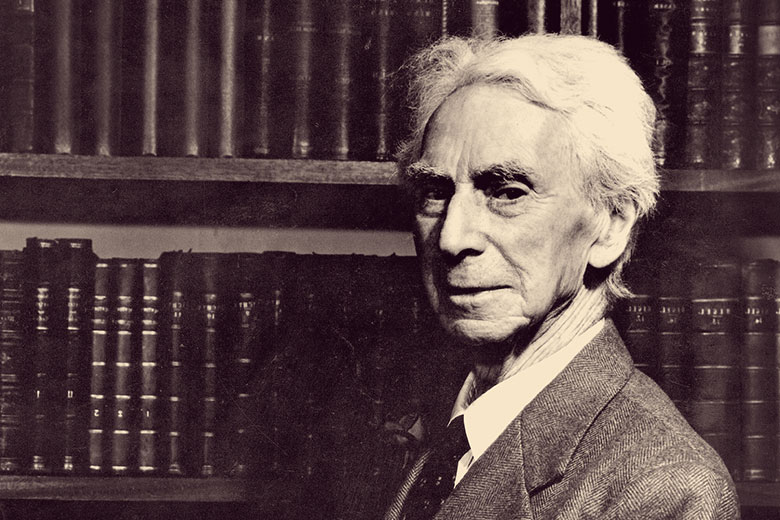
Georg Wilhelm Friedrich Hegel (1770-1831) was a German philosopher and an important figure in German Idealism which subsequently influenced the work of Karl Marx’s Dialectic Materialism as a basic principle idea in his book, “Das Kapital” that criticized the horrid condition of Capitalism and the class of bourgeoisie. Despite that, Hegel’s Absolute Idealism, in general opinion; it’s the most arduous, notoriously difficult to understand. There’s a reason why Hegel’s philosophy remain perplexed and bewildered. He does not write like other philosophers. German Idealism, tend to write in a scholastic tone that starts from Immanuel Kant, which only addressing to learned audiences, not to the common people. At here, I would really like to praise the merit of Russell’s commentary on Hegel, that he single-handedly clarify the notion of Hegel’s philosophy. He is utterly clear and brevity, his clarity in his writing and lucid explanation gave a very broad and precise connotation to his abstract theory of absolute idealism.
The best way to approach Hegel, that Russell suggests, should start with the Transcendental idealism of Immanuel Kant (1724-1804), which advances as a way to critique of knowledge, as a means of reaching a philosophical conclusion that, there is an emphasis upon the mind as opposed to matter, which eventually leads to the assertion that only mind exists. Russell thinks that, at Hegel youth, he is much attracted to mysticism, and his later view may be regarded, to some extent, as an intellectualizing of what had first appeared to him as a mystic insight. Hegel asserts that the ‘Whole’, in all its complexity, is called ‘Absolute’. The Absolute is spiritual, only the whole is real. The real is rational, for him, and that the rational is real. But when he says this he does not mean by ‘the real’ as what empiricist would claims. There’s another simple explanation put forth by Russell:
From his early interest in mysticism, he retained a belief in the unreality of separateness: the world, in his view, was not a collection of hard units, whether atoms or souls, each completely self-subsistent. The apparent self-subsistence of finite things appeared to him to be an illusion; nothing, he held, is ultimately and completely real except the whole. But he differed from Parmenides and Spinoza in conceiving the whole, not as a simple substance, but as a complex system, of the sort that we should call an organism. The apparently separate things of which the world seems to be composed are not simply an illusion; each has a greater or lesser degree of reality, and its reality consists in an aspect of the whole, which is what is seen to be when viewed truly. With this view goes naturally disbelief in the reality of time and space as such, for these, if taken as completely real, involve separateness and multiplicity.
Logic, as Hegel understands the world, is declared by him as the same thing as metaphysics, which every proposition has a subject and predicate. According to this view, every fact consists of something having some properties. It follows that relations cannot be real since they involve two things, not one. This demonstration might also be used to illustrate the “Hegel’s Dialectic“, which consists of a thesis, antithesis, and synthesis. He begins the argument of his logic by the assumption that ‘The Absolute is Pure Being’; we assume that it just is, without assigning any qualities to it. But pure being without qualities is nothing; therefore we are led to the antithesis: ‘The Absolute is Nothing’. From this thesis and antithesis we pass on to the synthesis” the union of Being and Not-Being is Becoming, and so we say: ‘The Absolute is Becoming.’ The process, according to Hegel, is essential to the understanding of the result. Each later stage of the dialectic contains all the earlier stages, as it were in solution; none of them is wholly superseded but is given its proper place as a moment in the Whole. It is therefore impossible to reach the truth except by going through all the steps of the dialectic. For philosophy, in that sense given: ‘the truth is the whole’, and nothing partial is quite true.
I would prefer to stop and defer the discussion of Hegel’s philosophy which it takes immense time and arduous efforts to speculate. But I rather like to compare the similarities of Hegel’s Dialectic Philosophy in comparison with the metaphysics of Ancient-Taoism. Taoism is a religious or philosophical mysticism of Chinese origin which emphasizes living in harmony with the Tao (the Way). Taoism denotes that the Tao is the principle that is the source, pattern, and substance of everything that exists. Yin Yang is a well known Taoist symbol, it represents the balance of opposites force in the cosmical perspective. When they are equally present, all is calm. When one is outweighed by the other, there is confusion and disarray.
“The unnameable is the eternally real. Naming is the origin of all particular things. Free from desire, you realize the mystery. Caught in the desire, you see only the manifestations. Yet mystery and manifestations arise from the same source. This source is called darkness. Darkness within darkness. The gateway to all understanding.”
Taoism is basically mystical; it has to be experienced. If the One or ‘Tao’ is all that exists, there can be no logical groundwork; as logic requires two proposition, nor indeed any understanding of how this One thing could cause the Many changing things which we experience in the world. Words are not expressible in the One reality. It refers to a power which embodies, surrounds and flows through all things, living and non-living. The Tao regulates natural processes and nourishes balance in the Universe. It cultivates individual ethical character to follow the art of ‘Wu Wei,’ which is to let nature to take its course by becoming one with the unplanned rhythms of the universe called ‘the Way’ or ‘Tao’.
I come now to Hegel’s Absolute Idealism, we are told that Spirit is the only reality and that its thought is reflected into itself by self-consciousness. It can be summarized as: ‘The Absolute Idea’, as a unity of the Subjective and Objective Idea, is the notion of the Idea – a notion whose object is Idea as such, and for which the objective is Idea – an Object which embraces all characteristics in its unity. The inference of Hegel’s philosophical works is profoundly obscure and perplexed people. Hence, Russell summarizes the features of Hegel’s philosophy and given a witty and ingenious counter-argument: ‘Like other historical theories, it required, if it was to be made plausible, some distortion of facts and considerable ignorance. Hegel, like Marx and Spengler after him, possessed both these qualifications. It is odd that a process which is represented as cosmic should all have taken place on our planet and most of it near the Mediterranean. Nor is there any reason, if reality is timeless, why the later parts of the process should embody higher categories than the earlier parts – unless one were to adopt the blasphemous supposition that the Universe was gradually learning Hegel’s philosophy.’
Philosophy of Science
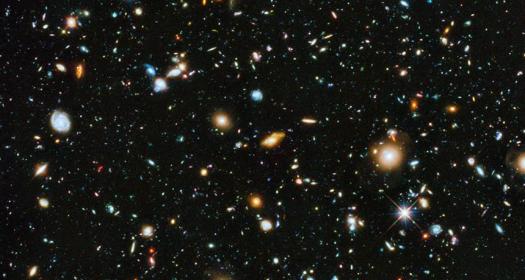
“Most science, at their inception, have been connected with some form of false belief, which gave them a fictitious value. Astronomy was connected with astrology, chemistry with alchemy. Mathematics was associated with a more refined type of error. Mathematical knowledge appeared to be certain, exact, and applicable to the real world; moreover, it was obtained by mere thinking, without the need of observation.”
On the basis of mathematics, that it thought is superior to sense, intuition to observation. Russell contends that, if the world of senses does not fit the mathematical knowledge, so much worse for the world of senses, nothing is permanent and ideal; in various ways, methods of approaching nearer to the mathematician’s ideal were sought, and the resulting suggestions were the source of much that was mistaken in metaphysics and epistemology*. This form of philosophy begins with Pythagoras, which is Pythagoreanism, he says, was a movement of reform in Orphism, and Orphism was a reform in the worship of Dionysus (God of Wine), that combines a peculiar form of Mysticism with Mathematics. Mathematics, in a sense, of deductive argument, begins with him. Legend says, he discovered the importance of numbers in music, and the connection which he established between music and arithmetic survives in the mathematical terms ‘harmonic mean’. Although no historical evidence exists, Euclid’s Geometry fundamental relations of shapes which called ‘Pythagorean Theorem‘ is named after him. This influences of mathematics on philosophy, partly owes to him, that profoundly alter the course of philosophy, especially Platonism, to be found in the essence of Pythagoras.
Science, like philosophy, has sought to escape from the doctrine of perpetual flux by finding some permanent substance during the changing phenomena. Plato ought to do this by indoctrinating the ‘World of Ideas’*; which, he thinks the world of intellect is distinguished from the world of the sense; the intellect and sense-perception are in turn each divided into two kinds. The underlying assumption is that reality, as opposed to the world of senses, is completely perfect, immutable and good. Philosophy, for Plato, is a kind of vision, the ‘vision of truth’. It is not purely intellectual; it is not merely wisdom, but the love of wisdom. Therefore, the position of the good in Plato’s philosophy is rather peculiar; science and truth he says, are like the good, but the good has a higher place. The ‘Good’ which Plato emphatically asserts is that; a philosopher is a man who loves the ‘vision of truth’. These studies are not to be pursued in any utilitarian spirit but in order to prepare his mind for the vision of eternal things. In astronomy, Russell writes: “He is not to trouble himself too much about the actual heavenly bodies, but rather with the mathematics of the motion of ideal heavenly bodies. This may sound absurd to modern ears, but strange to say, it proved to be a fruitful point of view in connection with empirical astronomy.”
The belief in the good as a key to the scientific understanding of the world is useful. Russell thinks, that any hypothesis, however absurd, may be useful in science and that enables a discover to conceive things in a new way. The Pre-Socratic* philosophers possess such a merit of approaching natural phenomena with a characteristic of scientific inquiry of nature. It is important, not because of what they achieved; but what they attempted. Their attitude, in the main, was purely scientific whenever it did not embody the prejudice of their age. It is imaginative, vigorous and filled with the delight of adventure. They were interested in everything. It is the Pre-Socratic Philosophers whose attitude of approaching the world which became the special objects of astronomy, physics, chemistry, zoology, botany, psychology and so on, all these we might just count as ‘science’ in the modern term.
Another thing that resulted from the rise of science was a profound change in the conception of man’s place in the universe. During the medieval world, the earth was the center of the heavens, and everything is revolving the earth, everything had a purpose concerned with man. In the Newtonian world, the earth was a minor planet of a not special distinguished star; astronomical distances were so vast that the earth, in comparison, was mere pin-point. Russell thinks, that the Copernican theory* should have humbling to human pride; since the earth has nothing to do with the vast universe. But in fact, the contrary effect was produced due to the triumph of science that restores human pride. The ancient world had been obsessed with a sense of sin and had acquired it as oppression to the Middle Ages. To be humble before God was both right and prudent, for God would definitely punish pride. Floods, earthquakes, comets, hurricane perplexed the people for centuries. But it became impossible to remain humble when men were achieving such triumphs in modern time.
Ever since the industrial revolution, the effect of machine production drastically alter the minds of the human conception of nature. The immense power of human endeavor to create something that is beyond imaginative; the invention of the rocket, the moon landing, nuclear boom, skyscraper, the airplane. All of these immense increase in the sense of human power has only an acceleration of a process began before the dawn of history when men diminished their fear of vicious animals by the invention of weapons and their fear of starvation by the invention of agriculture. There thus arise, among those who have a new belief in the power to alter nature with human endeavor by seeking aspiration to control with scientific propaganda, especially education. For this, Russell thinks, that there are certain old conceptions which represent men’s belief in the limits of human power; of these two chiefs are God and truth. But such conception tends to melt away in the modern time; even if not explicitly validated, they lose importance and are retained only superficially.
In all of this current issue that we, humans are facing right now; Russell thinks, that it is a grave danger for humanity. The danger for we might be called “Cosmic Impiety”. He says the concept of ‘truth’ as something dependent upon facts largely outside human control has been one of the ways in which philosophy hitherto has instilled the necessary element of humility and a dose of appropriate skepticism. The attitude of man towards the non-human environment has differed profoundly at different times. The Greeks, with their emphasis on the belief of Necessity or Fate superior even to Zeus. The middle ages’ Saints and Mohammedanism* carried submission much further: humility towards God was their first duty. Any initiative was cramped by this attitude with the exercise of the authority, and great originality was scarcely possible in that time. The Renaissance restored human pride but carried it to the point that leads to anarchism and revolutions. The contemporary people, who emphasize and over-praise the Scientism with the dogmatic endorsement of scientific methodology and the reduction of all knowledge to only that which is measured or confirmatory; that is an ideology which promotes science as the purportedly objective means by which society should determine. The modern industrialism and the technique of man conception of nature which altered exponentially – have revived the arrogant of humanity. Modern Man, formerly too humble, begins to think of himself as almost a God.
To be continued…
Footnote:
mistaken in metaphysics and epistemology* – It appeared in the discussion of Part II at the philosophy of Logical Analysis which Russells thinks all the philosophical problem can be solved if philosophers aware of the problem of philosophical syntax.
World of Ideas* – Plato’s metaphysical dualism doctrine that the world of senses and the world of ideas.
Pre-Socratic* – It is a term to describe the natural philosophers who speculate the natural phenomena before the time of Socrates.
Copernican theory* – It is a theory formulated by Nicolaus Copernicus and published it in 1543, that the Sun is near the center of the Universe, motionless, with Earth and the other planets orbiting around it in circular paths.
Mohammedanism* – Mohammedanism is a term for a follower of Muhammad, the Islamic prophet which broadly classified the theology of Islam.

