
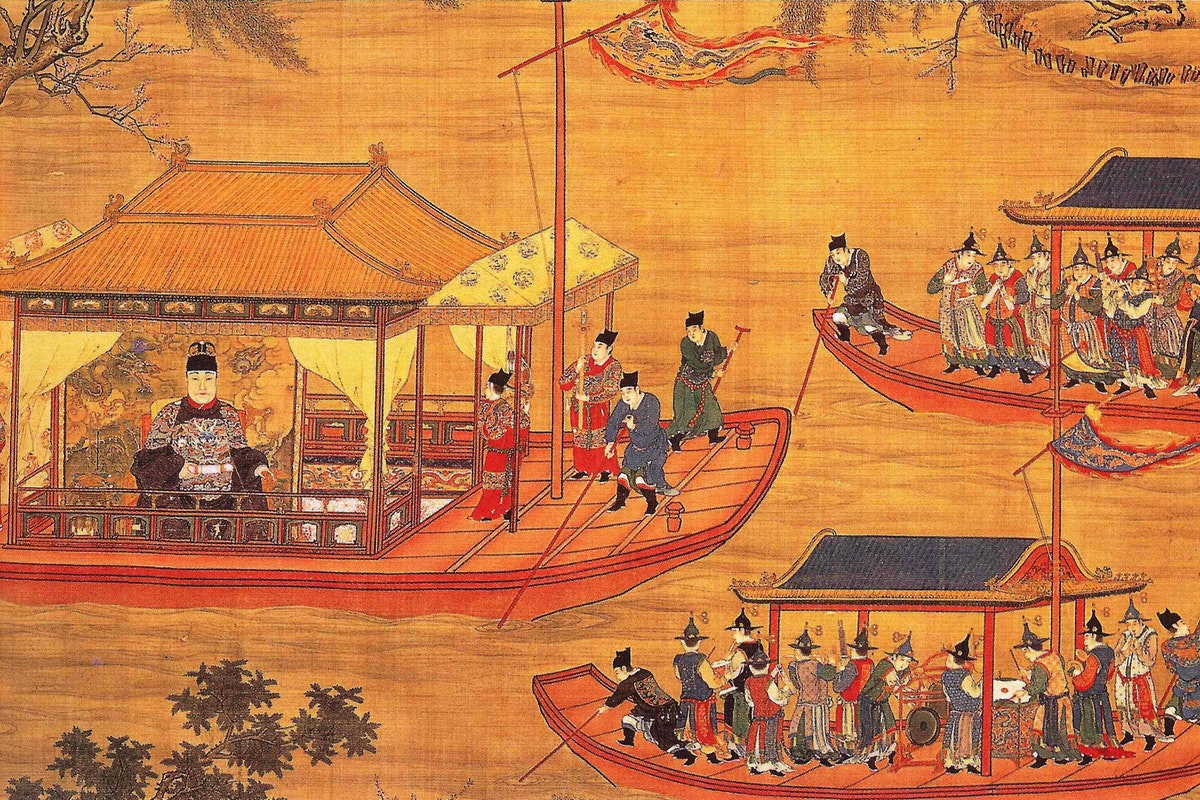

“Chinese thought is predominantly human-centered and practice-oriented. China’s greatest minds are not about who and what we are, but rather about how we should live our lives, how we relate to others, how we should organize society and how can we secure the well-being of those who live with us and for whom we are responsible.”
– Roel Sterckx
It is biased to read the book and not to mention a review about it. I grow up in a very strict Chinese cultural background family. The thought of “filial piety” has been indoctrinated since my childhood. Hence the idea of Confucius, Daoism, etc is not fresh but more like a revision to me. But I’m curious, curious in the sense that, I would like to know how Western professionals perceive Chinese culture. How do they think about the notion of “Filial Piety”, and most importantly, how do these ideas differ from Western philosophy?
The author says: “To most, thinking like a Chinese meant focusing on society, politics and the ethics of the here and now. The shape of the cleaver mattered little as long as it could cut. Perhaps not much has changed.” I believe it is such Pragmatism that shapes the idea and the society of China, the building blocks of China society are mostly based on practical knowledge and little retrospective on the self. Most of China’s masters of philosophy were a product of the age of profound political and military turbulence. The chaos around them must have felt like the end of the world. Many thinkers were descended from the now jobless ranks of lower-level aristocratic families. They roamed from court to court to sell their ideas to whoever would grant them sustenance and patronage. Just as Master Sunzi sums it up with a conviction: “Warfare is the greatest affair of state, it is the basis of life and death, and the way to survival or extinction. Therefore it is a subject of inquiry that cannot be left un-investigated.”
The cosmological view of the Chinese differed drastically from the Western ideology. Chinese Heaven (Tian) is not a place or creating force as in the Judeo-Christian tradition. It represents the force of all that exists and exerts a power that covers everyone and everything. As such, Heaven was seen as a supreme moral arbiter. The Mandate of Heaven is a political concept that is part of the vocabulary of all thinkers and statesmen in traditional China. Receiving the Mandate of Heaven was essential to claim legitimate succession. It was used as an ideology to explain and legitimize the transfer of political power.
Rather than claiming that the world was created out of nothing, the Chinese conceive of the world and its complex structures as something that evolved out of a prior state of simplicity or non-differentiation. The metaphysical view of the Chinese is mystical, all the Chinese thinkers speak of Dao. Yet the word Dao is not easily defined. It can only be understood only as an aggregate of its various meanings. But language will always be an imperfect vehicle to express what is inexpressible. The Dao cannot be able to separate into several components or elements since it is “one”. It is wholeness, a unity that permeates everything and ties everything together: Humans, the Heavens, Earth. There is not much of Aristotelian mind in the Chinese philosophy of schools. The basic stuff out of which all things are configured is known as (Qi). In cosmological terms, one may think of qi as a sort of fluid that is present in the atmosphere, out of which everything condenses and into which all things dissolve. At this analogy explanations, one might think that Qi is closely related to the substance as in a term described by Democritus as “Atom”. But apparently, it is not. Qi is energetic and constantly on the move, like the stream that surrounds us when we take a hot shower in a cubicle. It can condense into water drops again or evaporate when open the door, but it never really disappears. Therefore, the cosmos generates itself from a formless state through a process in which Qi is refined to produce everything in the universe which very much differs from Plato’s Theory of form where Mind and Matter exist in two different realms. As the author puts it this way:
“Note that I have used the word ‘phases’ and not ‘elements’. When ancient Greeks spoke of the elements (earth, fire, water, air, ether), they conceived of these as substances or building blocks that make up everything. They were driven by the question “What is it” – what are we made of? The Chinese model of the Five Phases is different. A phase is not a thing; it is a process and a stage. The assumption is that all-natural and cultural phenomena are closely interrelated and that these correlations between the human body, nature, time, and space can be described as passing through a cycle of phases.“
The Chinese philosophers detected in the cosmos and nature at large was not simply a game of abstract or speculative thinking. They devoted most of their time to thinking about those who occupied leading roles in society. Chinese Political Political science has been the same since ancient times, they look the society in a collective view where everybody plays a role in the whole. A dominant view was that human character should be formed through a regime of study and learning, and in the context of the family. The family forms the unit in which children and adults are conditioned to acquire the social skills and obligations that can be projected to the level of the state. Of all virtues that bond the family unit together, filial piety is by far the most defining one. It is the utmost moral obligation to obey and unconditionally support one’s parents and the elderly. It continues to be value instilled in children and young people across the Chinese world today, despite the steady challenges of individualism and materialism brought on by a rapidly modernizing society. The young devote their efforts to the well-being of the elderly and the family as a whole.
“Rituals is what it does. Rituals create their own meaning through the action itself. They include an element of performance and repetition, they tend to be scripted and, broadly, their aim is to impose order on the world….rituals can help us articulate the relationships between ourselves and between us and the world beyond.“
Confucius never asked the one burning question that has consumed theologians and philosophers in other traditions elsewhere, namely whether or not spirits exist. For him, the good life was to be found and an orderly society here and now, rather than in a life hereafter. Instead of theorizing about spirits, Confucius advises that it is more important to get on with them and not to be distracted by questions to which there is no real answer. The point is that, the author believes, is that ancestral worship is not simply about the dead or the spirits. It also underpins the social maps of the living, the relationships between them, and the claims they make upon each other. While wives and sons, grandsons, and great-grandsons all take charges of their own assigned part in the rituals for a deceased father, relationships are re-affirmed between them and in the eyes of the outside world by performing ritual and being filial piety to maintain the bond beyond the generations to include the entire lineage or clan.
The most interesting part of the book is how the author describes the difference in the development of the scientific inquires compared with the West. He says: Just as the Chinese perceive nature as a whole. Here China differed from the Greek world, where, as early as Pythagoras in the sixth century BCE, and through to thinkers such as Aristotle, such curiosity in nature did inspire theoretical and analytical writings. However, to claim that the ancient Chinese did not develop a ‘science of nature’ on grounds that their observations treatises or discussions in a language that mirrors that of the Greeks and Romans would be a misinterpretation of Chinese achievements in many fields, including medicine, pharmacology, and astronomy. The author argues that the reason why is that the truth in the assertion that in ancient China theoretical interest in the working of nature was overshadowed by a preoccupation with human ethics and political philosophy. The social chaos prompted China’s masters of philosophy to formulate their theories in the outcome of human behavior and social coherence. In sum, the author writes:
“Needham and his collaborators have hinted that the combination of Confucianism, with its emphasis on social ethics, together with hierarchical and highly centralized bureaucratic institutions, is what impeded the development of science in China. It exerts a paralyzing influence akin to that medieval theology in pre-Enlightenment Europe. China invented things but did not experience an industrial revolution. Its political isolation during the Qing dynasty and lack of internal intellectual and technological competition failed to incite the development of abstract thinking.”
However to look at the course of historical events and to underpin the mistake of the development of science and the impediment of political economy is biased where the evidence to support the theories is obvious but narrow. Nevertheless, I personally think this book has thoroughly interpreted most of the cosmological views of each of the schools of Chinese philosophy. Also, very comprehensive writing and interpretation of the notion of the teaching of Daoism pervades Chinese thinking even in modern society. For those, who would like to know and to read something that’s lighter and easier to comprehend that focuses on the historical event that forms the social structure in Asian society, I would recommend the book by Professor David L. Johnson, A Reasoned Look at Asian Religion. Other than that, this is a perfect book to start with to understand the “Chinese Thought”.
Thank you for reading.

